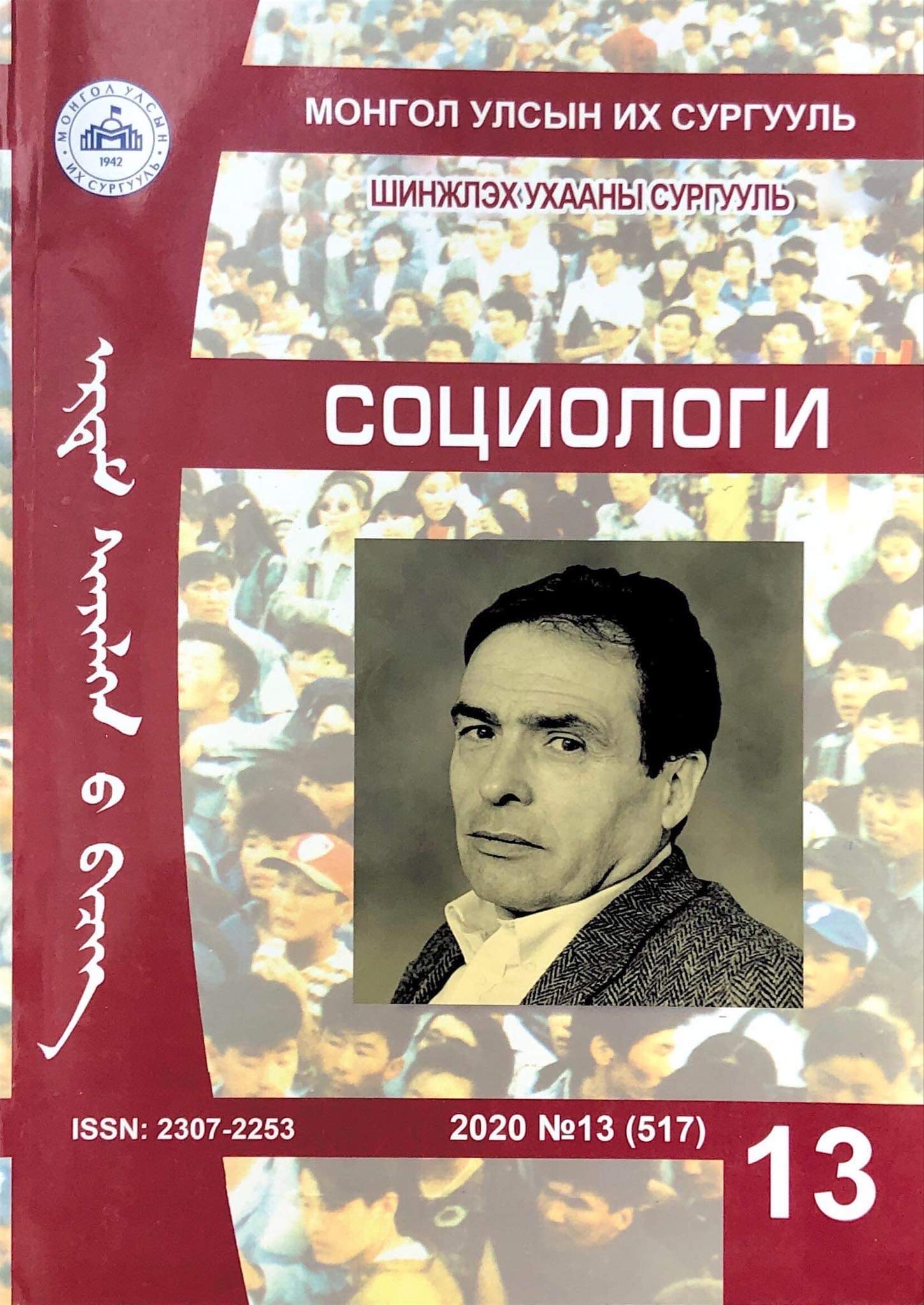
ХҮНИЙ ЭКОЛОГИ БА САЛБАР ДУНДЫН ШИНЖИЛГЭЭ. РОБЕРТ ЭЗРА ПАРК /1864-1944/
Abstract
Abstract; Park coined the term human ecology, the study of the relationship between humans and their natural, social, and built environments. Park himself explains human ecology as, “fundamentally an attempt to investigate the processes by which the biotic balance and social equilibrium are disturbed, the transition is made from one relatively stable order to other”.
Park found that a key underpinning of his human ecology is the concept of competition. He believed that it is the primary feature of the biotic level of life. He maintained that human restriction of competition is what allows our modern concept of society to exist. According to Park’s papers regarding this topic, “Dominance” and “Succession: An Ecological Concept”, ecological competition can be manifest itself through dominance and succession.
While at the University of Chicago, Park continued to strengthen his theory of human ecology. Along with Ernest W. Burgess developed a program of urban research in the sociology department. They also developed a theory of urban ecology, which first appeared in their book Introduction to the Science of Sociology (1922).
They predicted that cities would form into five concentric rings with areas of social and physical deterioration concentrated in the center and prosperous areas near the city’s edge. This model is known as concentric zone theory, it was first published in The City (1925).